





400/45-17.5 Tyres for Agricultural and Industrial use
Tyres in the 400/45-17.5 segment are widely used in agriculture, transport and industrial applications where high load capacity, stability and soil protection are required. These tyre sizes are often interchangeable depending on manufacturer designation, construction type and regional naming conventions. Below you will find an overview of the most common alternative size markings and their typical applications.
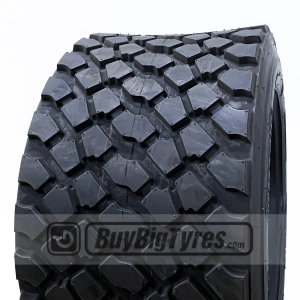
- Inch: 17.5"
- Tyre Size: 400/45L17.5
- Pattern: D909
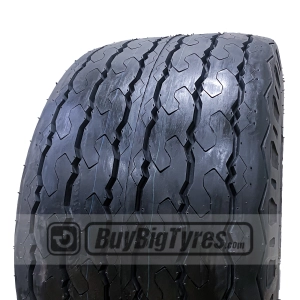
- Inch: 17.5"
- Tyre Size: 400/45-17.5
- Pattern: D905
400/45-17.5 Tyre
The 400/45-17.5 tyre size refers to a tyre with a nominal section width of 400 mm, an aspect ratio of 45%, and a rim diameter of 17.5 inches. This size is commonly fitted to agricultural trailers, manure spreaders, balers and transport equipment.
Thanks to its wide footprint, the 400/45-17.5 tyre offers good load distribution and reduced ground pressure, helping to limit soil compaction. It is suitable for both field and on-road use, depending on tread pattern and carcass construction. This size is often available in bias-ply and radial versions, making it a versatile choice for mixed operations.
400/45L17.5 Tyre
The 400/45L17.5 designation is an alternative marking for the standard 400/45-17.5 size. The letter “L” typically indicates a high-load specification or follows a manufacturer-specific naming convention rather than a dimensional difference.
In practice, a 400/45L17.5 tyre has the same overall dimensions as a 400/45-17.5 tyre and can be used interchangeably, provided that the load index and speed rating match the application requirements. These tyres are frequently used on agricultural trailers and implements that require increased carrying capacity without changing rim size.
400/45R17.5 Tyre
The 400/45R17.5 tyre features a radial construction, indicated by the letter “R”. Compared to bias-ply tyres, radial tyres offer improved ride comfort, better heat dissipation and longer service life, especially during frequent road transport.
This size is commonly chosen for high-mileage applications such as transport trailers, slurry tanks and large agricultural implements. The radial design allows for a larger contact area, improving traction and reducing rolling resistance, which can contribute to lower fuel consumption.